
Provocateur: A Life of Ideas in Action
Clive Hamilton has spent a life asking why. In his unique memoir, Provocateur, he shows us why questioning the status quo matters, how powerful arguments can change the country, and how the life of ideas in action actually works.
Clive Hamilton has spent a life asking why. In his unique memoir, Provocateur, he shows us why questioning the status quo matters, how powerful arguments can change the country, and how the life of ideas in action actually works. From why climate change matters to how we understand ourselves as Australians and the dangers to us.
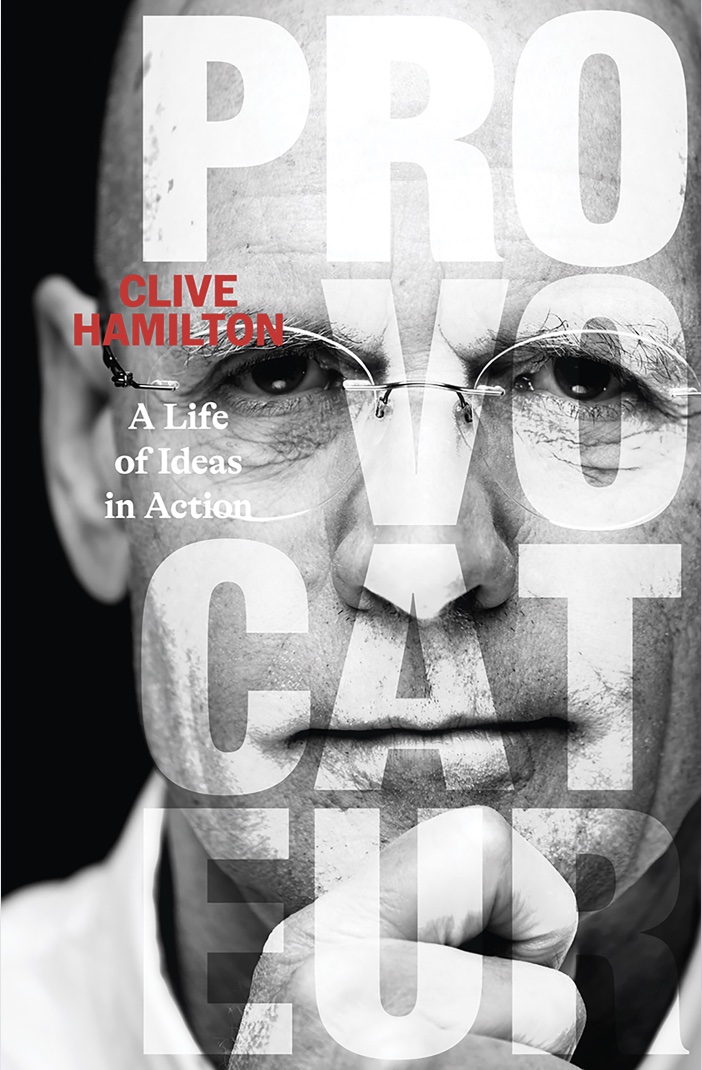
Hidden Hand: Exposing How the Chinese Communist Party is Reshaping the World
Written with German sinologist Mareike Ohlberg and published around the world in 2020, Hidden Hand: Exposing How the Chinese Communist Party is Reshaping the World, argues that the CCP is determined to mould the world in its own image.
Written with German sinologist Mareike Ohlberg and published around the world in 2020, Hidden Hand: Exposing How the Chinese Communist Party is Reshaping the World, argues that the CCP is determined to mould the world in its own image.
Written with German sinologist Mareike Ohlberg and published around the world in 2020, Hidden Hand: Exposing How the Chinese Communist Party is Reshaping the World, argues that the CCP is determined to mould the world in its own image. The Party is hostile to democracy, press freedom, an independent judiciary, religious freedom and universal human rights and is actively promoting its authoritarian political system as superior to liberal democracy.
Silent Invasion: China’s Influence in Australia
Clive’s controversial 2018 book, Silent Invasion: China’s Influence in Australia, almost went unpublished after three publishers pulled out citing fears of reprisals from Beijing. His warning that the Chinese Communist Party is engaged in a systematic campaign to exert...
Clive’s controversial 2018 book, Silent Invasion: China’s Influence in Australia, almost went unpublished after three publishers pulled out citing fears of reprisals from Beijing. His warning that the Chinese Communist Party is engaged in a systematic campaign to exert political influence in Australia seemed vindicated before the book appeared.
Clive’s controversial 2018 book, Silent Invasion: China’s Influence in Australia, almost went unpublished after three publishers pulled out citing fears of reprisals from Beijing. His warning that the Chinese Communist Party is engaged in a systematic campaign to exert political influence in Australia seemed vindicated before the book appeared. Published in February, Silent Invasion quickly became a best-seller and is being read in countries around the world that face a similar threat from a rising China under an increasingly authoritarian state.

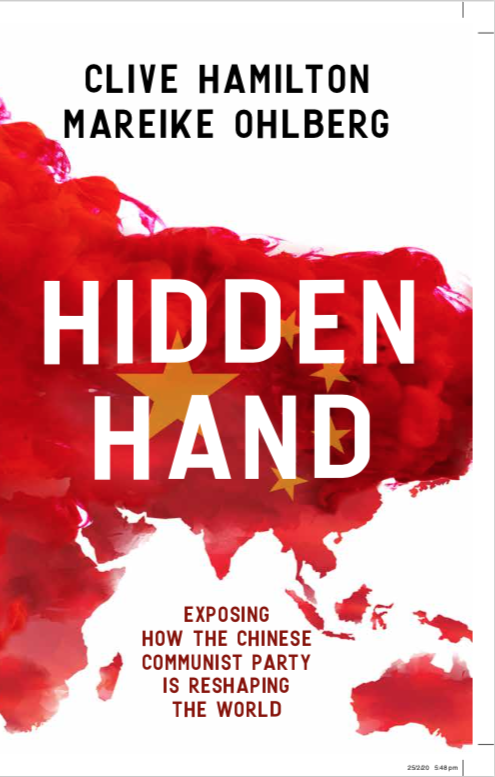
Defiant Earth: The Fate of Humans in the Anthropocene
Humans have become so powerful that we have disrupted the functioning of the Earth, bringing on a new geological epoch: the Anthropocene. The stable environmental conditions that allowed civilisation to flourish are disappearing.
Humans have become so powerful that we have disrupted the functioning of the Earth, bringing on a new geological epoch: the Anthropocene. The stable environmental conditions that allowed civilisation to flourish are disappearing. What does it mean to have arrived at this point, where human history and Earth history collide?
Humans have become so powerful that we have disrupted the functioning of the Earth, bringing on a new geological epoch: the Anthropocene. The stable environmental conditions that allowed civilisation to flourish are disappearing. What does it mean to have arrived at this point, where human history and Earth history collide? Clive Hamilton argues we need to rethink everything.
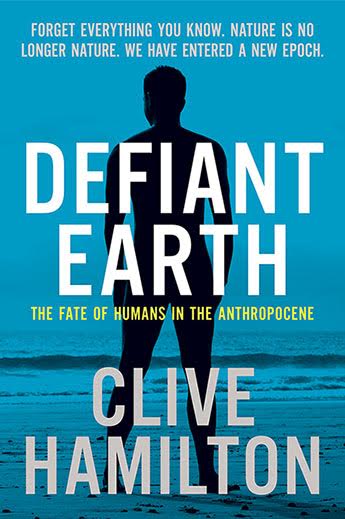
What Do We Want? The Story of Protest in Australia
Over the decades, protestors have been instrumental in driving the great social movements that have defined life in modern Australia. Yet our colourful history of protest has never been told. What Do We Want? The Story of Protest in Australia chronicles for the first time the protest movements that confronted the ugliness in Australian society and caused revolutionary shifts in social attitudes.
Over the decades, protestors have been instrumental in driving the great social movements that have defined life in modern Australia. Yet our colourful history of protest has never been told. What Do We Want? The Story of Protest in Australia chronicles for the first time the protest movements that confronted the ugliness in Australian society and caused revolutionary shifts in social attitudes.
Over the decades, protestors have been instrumental in driving the great social movements that have defined life in modern Australia. Yet our colourful history of protest has never been told. What Do We Want? The Story of Protest in Australia chronicles for the first time the protest movements that confronted the ugliness in Australian society and caused revolutionary shifts in social attitudes.


LATEST
Free Speech vs Gender Dogma
First posted on Substack August 26, 2026 Part of the crowd at the rally This is the speech I gave to the ‘Restore Women’s Rights’ rally in Martin Place, Sydney, on 23 August 2026. We Australians are mostly a tolerant bunch. We are fine with other people living their lives...
Read MoreOn Jizz and Bird Worlds
First published on my Substack August 15, 2026 In the world of birding, “jizz” is a fascinating but little-used term (perhaps little used because of its other, crude meaning). Jizz refers to the overall impression of a bird—its shape, posture, movement, and “vibe”—that allows an experienced birder to identify it...
Read MoreThe lesbian phallus, and how it found its way into the Federal Court of Australia
First published on Substack June 30, 2026 In May, the Full Court of the Federal Court of Australia ruled that Sall Grover, the proprietor of a women-only app Giggle for Girls, had discriminated against a transwoman, Roxanne Tickle, for denying Tickle access to the app. Sall Grover did not know that Roxanne...
Read MoreThe Rise of Resilience Power, and Odd Arne Westad’s Climate Disavowal
First published on my Substack June 16, 2026 The Coming Storm, the new book by Yale historian Odd Arne Westad on great powers and the prospects for world war, is attracting considerable attention. Westad’s basic argument is that today’s pattern of great-power relations bears an uncomfortable resemblance to the years preceding the...
Read More